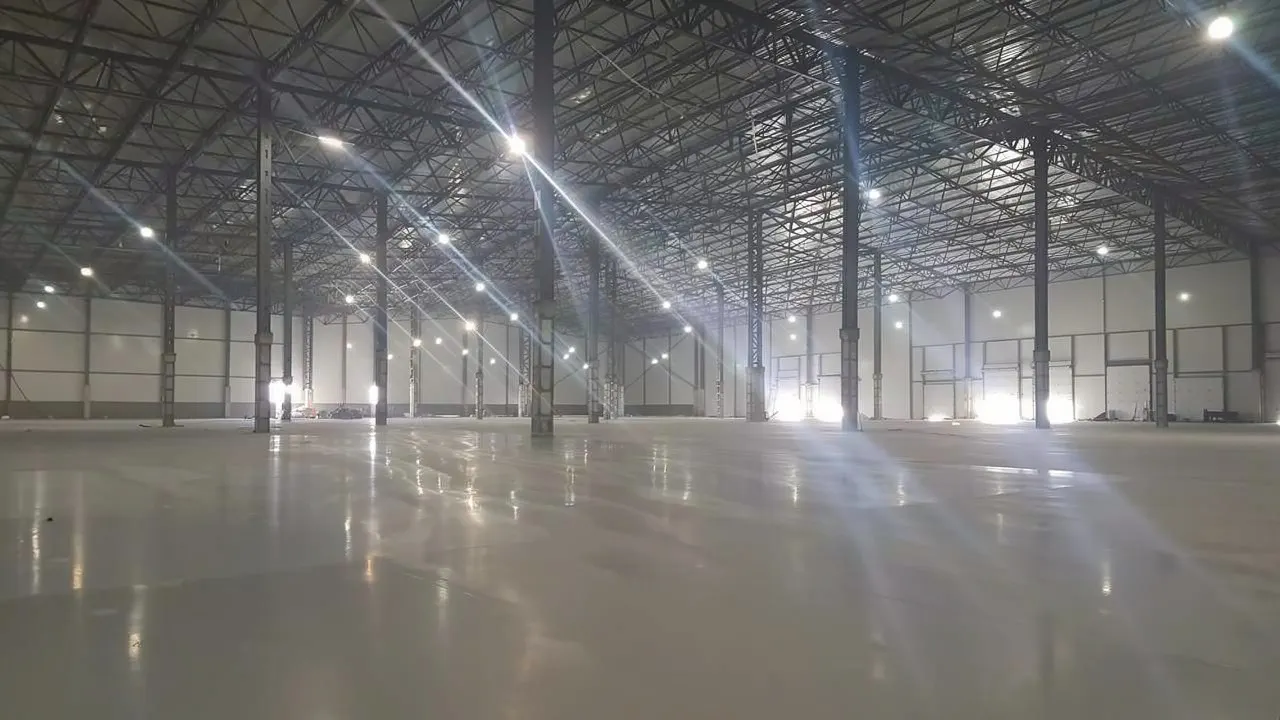
Concrete Floor with Topping: Maximum Strength, Dust-Free Surface
A concrete floor with topping is the gold standard for modern warehouse and logistics facilities. The technology involves working dry hardener compounds into freshly poured concrete, followed by power-trowel finishing.
Topping consists of high-strength cement, mineral aggregates (corundum, quartz, basalt) and polymer additives. Once worked into the concrete slab, it forms a single monolithic layer 2–3 times stronger than plain concrete.
Advantages of Topping Floors
No Dust
The surface produces no dust at all — protecting warehouse goods and material-handling equipment.
Impact Resistance
The coating won't chip from dropped metal parts, tools or pallets.
Fast Turnaround
Foot traffic is possible after just 3–4 days, and full equipment use after 28 days.
Cost-Effective
Topping is applied at the same time as pouring, saving time and money on a separate finish coating.
Compounds We Use
- Quartz topping — medium loads: warehouses, parking garages
- Corundum topping — heavy industry and intensive equipment traffic
- Pigmented colored toppings — for zoning spaces
- Curing compounds — retain moisture in the concrete
Application Process
Hardener consumption depends on what will be running over the floor. For warehouses and parking garages with medium loads, 4–5 kg/m² of quartz topping is enough; for facilities with heavy equipment and metal wheels, corundum at 6–8 kg/m² is used. Adding extra "just in case" doesn't help — too thick a layer bonds worse with the base and later flakes off in scales.
Timing is the most critical part of the job. Topping is worked into fresh concrete when a boot print leaves a mark three to five millimeters deep: too early and the mix sinks in, too late and it won't bond with the cement stone and stays as dust on the surface. This window lasts a few hours and shifts with temperature, humidity and concrete grade, so the site shift is planned around the weather and the work runs without interruption.
After troweling, the surface is treated with a curing compound — a film-forming sealant that keeps moisture inside the slab. Without it, the concrete loses water to the air, the topping never reaches its design strength, and within a year it starts producing dust even with correct application. Foot traffic is allowed after three to four days, full equipment load after 28 days.
Reach out to Ol Bud Invest for a floor that will stand up to whatever your business throws at it. We guarantee strict process compliance and quality control at every stage.
Completed Projects
Sites Where We've Done This
FAQ
Frequently Asked Questions
Topping is a dry mix of cement, mineral aggregates and additives, spread evenly over fresh concrete and power-troweled in. It is applied only during pouring — topping cannot be applied to cured concrete.
Quartz suits medium loads (warehouses, parking garages); corundum suits heavy industry and intensive equipment traffic. Corundum increases surface hardness up to twice that of quartz.
No — a properly troweled topping creates a dense, dust-free surface. For maximum protection, we also apply special curing compounds that retain moisture in the concrete.
On average, topping adds 15–25% to the cost, which is far cheaper than polymer coatings — while giving the floor wear resistance comparable to granite.
Yes — topping systems are frost-resistant and withstand temperature swings, making them suitable for outdoor yards, ramps and unheated warehouses.
The standard colors are gray and green, but we can also install pigmented colored floors on request — a convenient way to color-code zones in a warehouse.
Foot traffic after 3–4 days, light equipment after 7–10 days, full operational use after 28 days.
Related Services
Frequently Ordered Together
Free Estimate
We'll Quote Your Floor Within 1 Business Day
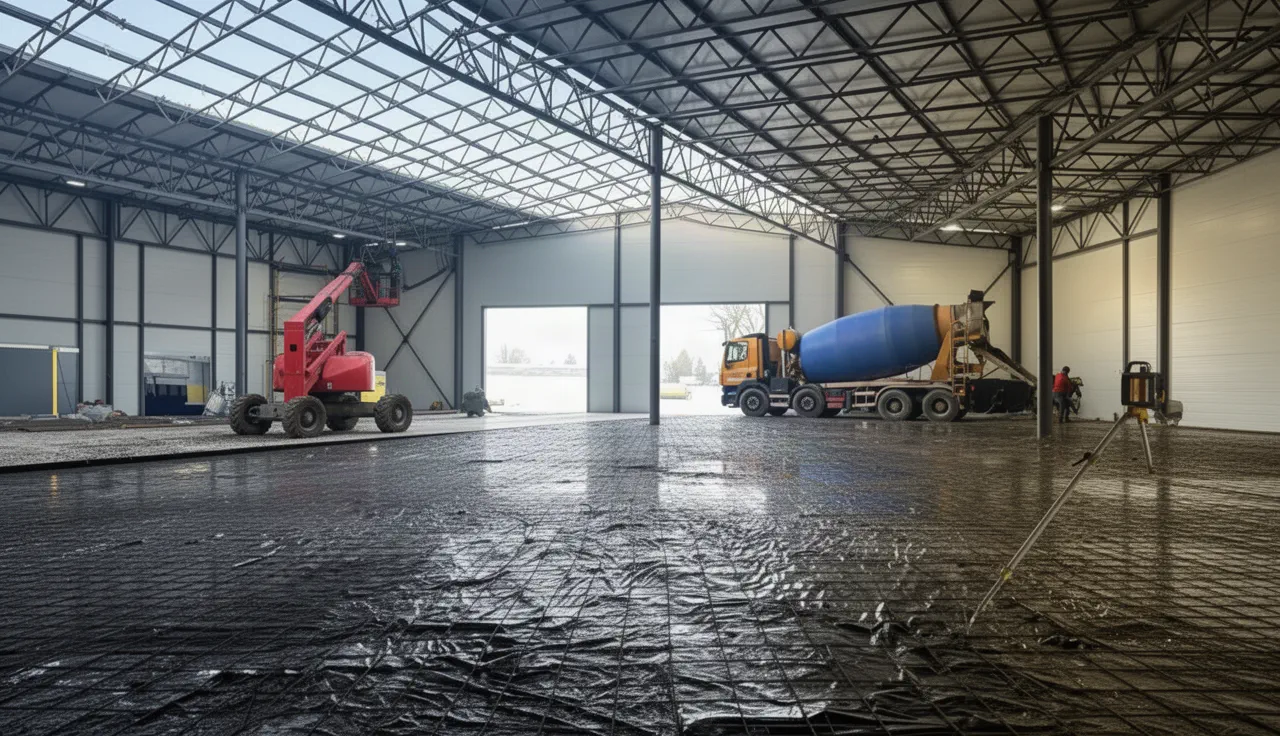
Submit a request and our engineer will select the slab thickness, reinforcement type and finish coating, then send you a quote. We take on projects from 200 m².